Mostrando entradas con la etiqueta Learning by doing. Mostrar todas las entradas

jueves, 25 de enero de 2018

THIS SEMESTER WE HAVE DONE A LOT!

The class of 2nd grade, have prepared presentations at home by themselves about the solar system, maps, seasons...


We have also made a beautiful mural with healthy food and dishes we can try.


Every semester our students develop a concept they have learned about in Science


We found out how many bones we have on our skeleton, the different parts...


We also worked in teams to make our own book about animals and other things...


We learned so much in Music and Arts and hope forwards to another semester of learning and fun!

馃槃馃槃馃槃馃槃馃槃馃槃馃槃

viernes, 17 de noviembre de 2017

YEAR 4: HOW WE BREATHE

Hello bloggers,

Have you ever wondered how we breathe?
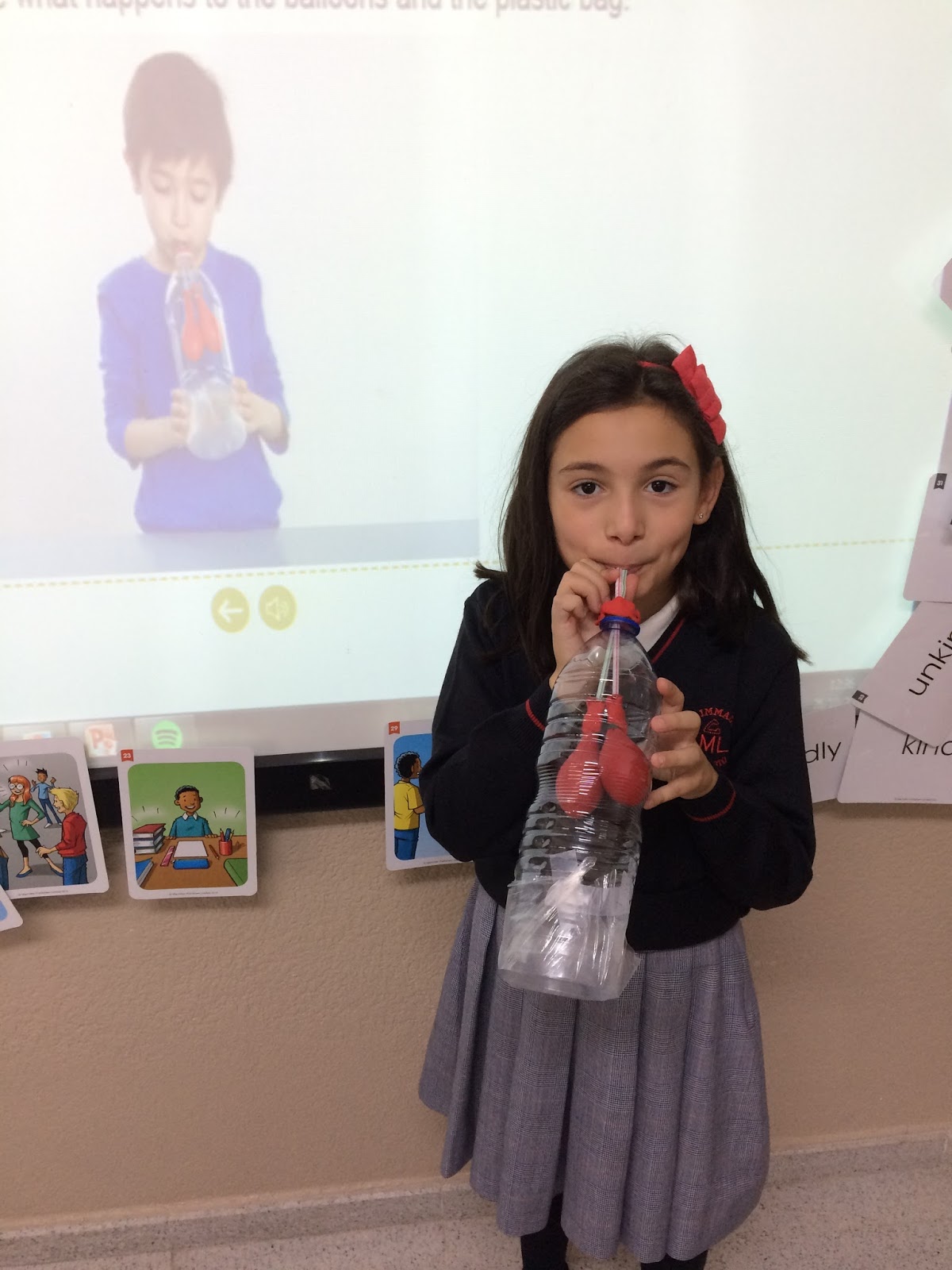
The diaphragm changes the amount of space inside our chest when we breathe in and out.

Year 4 students made a project using reclycled materials such as plastic bottles and straws. They had to simulate how our lungs work.

Here you have some pictures showing the final result:


Now I want you to think:

- What do the straws, the balloons and the plastic bags represent?

See you later bloggers!

viernes, 31 de marzo de 2017

Year One and Infantil: Chocolate Fruit and Books!


Chocolate Fruit and Books!

This week in Infantil we have been decorating fruit with chocolate.


In Year One we have been learning about parts of the town. They have also been learning about living and non-living things. For Grandparents Day they have made beautiful books about plants to gift their beloved Grandparents.


viernes, 24 de febrero de 2017

Third Grade

In English, the students are learning about the equipment used for various water sports.  

In Social Science, they are studying the geography of Spain.  To help them learn the names of the autonomous communities and their capital cities, each class cut out and glued together a color-coded map.  Here are some photos:

 3A


 3B


In Natural Science, the children have been learning about plants.  They also grew their own plants in the classroom.  Here are some pictures:
3C


viernes, 10 de febrero de 2017

First Grade, Second Grade and Third Grade in February

In English class the children have been learning about farm animals and actions that they can do.  Here´s a photo of the students playing animal charades:
1B


In Natural Science they are learning about healthy food and healthy habits.  Last week they made posters about healthy and unhealthy foods.  Here are some pictures:

1A 

1C

In Social Science, they are learning about where they live and different parts of the city.  This week they are doing presentations about Madrid and what they see on their way to school.

And here are some photos from other classes that we hope you enjoy:

2A making origami birds

3B learning about Chinese New Year


3C dancing to a song about animals

lunes, 30 de enero de 2017

ANIMAL CLASSIFICATION OUTLINE (3RD GRADE)

Hi everybody!

This week we will have the exam about the animal kingdom,

We know unit 3 is quite difficult because it has lots of new concepts and names we barely remember from last years.

That's why teachers have prepared a very useful outline in order to help you studying.

I hope this might be helpful for you!


domingo, 15 de enero de 2017

HOW DO WE STUDY ``UNIT 3:EUROPE´´ IN THIRD GRADE?

Hello bloggers!

When I first opened the social science book the other day, I realized it might be difficult for 8 year old children to study the topic about Europe. 

Unit 3 is very important but also very extensive. That is because we have to study some of the most relevant countries and capital cities in Europe as well as mountains and rivers. So, the question I should try to answer is: how do we study unit 3: Europe?

1. USE AN ATLAS

An Altas book is a very useful tool when studying geography. There you can find physical and political maps, information about all countries in the world and their corresponding flags.

If you are planning to buy an atlas, remember that it should be adapted to your children's age. Those from SM are always a good choice. 


2. SETERRA
If you are not in the mood of spending money on books, there is an alternative and it is called SETERRA. Seterra is a free and educative software full of games and maps.

All games consists of clicking the correct answer on a map while the time is running so you should be as fast as possible. This is a good way of learning by playing and you do not have to play alone. You can play with a family member like your brother and sister. You can spend a few minutes on studying the maps and then start playing. The one who gets all the answers correct by using less amount of time should win.   

There is also a website: http://online.seterra.com/es


3. WEB RESOURCES
Internet is a great place to find thousands of web resoruces related to education. And there are thousand of websites to study about geography that are very useful. Here I would recommend you some of them that I like the most:

JUEGOS GEOGR脕FICOS is great when you want to study in different languages (English, Spanish and French available)
TOPOROPA is my favourite website. It is all related to EUROPE!
KIDS CORNER EUROPE is kind of a board game but online. You have to roll a dice and answer several questions about Europe. If you get them all right then you should win. 

These are some web resources but there are many more. Just write ``europe interactive games´´ or ``countries in europe interactive´´ on google and you shall find what you are looking for.

4. USE THE PUPILS BOOK AND ACTIVITY BOOK

My final and last advice is: do your homework, review the unit daily and study through the social science book. 

Why? Because you can use thousand of web resources but, in the end, the exam is all about what we have been studying in the book.


I hope you can find this entry useful. Now it is your turn to make an effort and start studying our great continent Europe!

Best regards!

viernes, 16 de diciembre de 2016

Third Grade: oral presentations

Third Grade

In Social Science the children have been working on making travel brochures for an assigned country. They have been working very hard, and the projects are looking fantastic so far!
3B with their projects!

In English we have been working on a group project to create a zoo. The children have researched many different animals, and found out interesting and useful facts about each. For example the climate that the animals come from, the types food that they eat, and the environment that they live in. They will then use this information to create a suitable habitat within the animals enclosure at their zoo. 
If you visit the zoo this Winter, the children will be able to tell you many facts about the animals in English!

viernes, 18 de noviembre de 2016

Sixth Grade

For the past few weeks, students have been working on presentation posters for six different holidays in English speaking countries: Memorial Day, Independence Day, Bonfire Night, April Fool´s Day, Pancake Day and Labor Day.  What are other holidays celebrated in the Anglophone world?

Here are some photos of 6A hard at work on their presentations:


lunes, 4 de mayo de 2015

Mixtures & Fruits

Hola bilinguals!

En una unidad tan complicada llamada ``matter and materials´´, los alumnos de tercero se divierten aprendiendo. ¿C贸mo lo hacen? Jugando a ser unos ``MATER CHEFS´´.

Los profesores solo les hemos proporcionado los materiales correspondientes, unas cuantas indicaciones y... ¡Voil脿! Una rica macedonia de frutas. As铆 da gusto aprender.

¡Bien hecho chic@s! :)


P.D: Gracias tambi茅n a nuestros queridos auxiliares de conversaci贸n Misha y Mike por su gran ayuda. Thanks a lot!