Mostrando entradas con la etiqueta Social Science. Mostrar todas las entradas

martes, 16 de enero de 2018

YEAR 4: THE WATER CYCLE.

Hello bloggers!!

We are studying the water cycle in fourth grade. Here you have the PPT teachers are using to help you understand how it works.


See you soon!!

viernes, 17 de noviembre de 2017

YEAR 4: HOW WE BREATHE

Hello bloggers,

Have you ever wondered how we breathe?
The diaphragm changes the amount of space inside our chest when we breathe in and out.

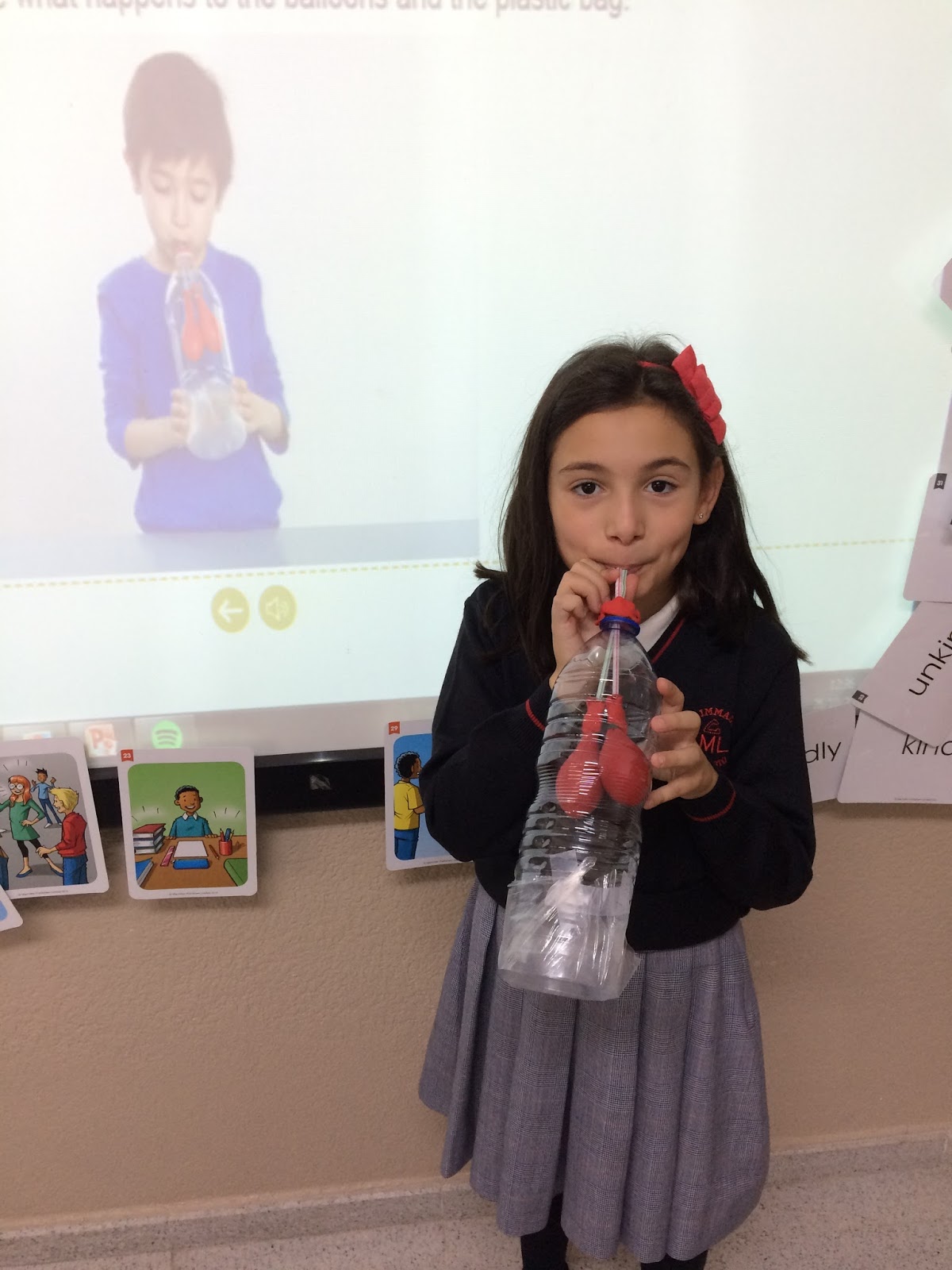
Year 4 students made a project using reclycled materials such as plastic bottles and straws. They had to simulate how our lungs work.

Here you have some pictures showing the final result:


Now I want you to think:

- What do the straws, the balloons and the plastic bags represent?

See you later bloggers!

lunes, 23 de octubre de 2017

Year 4: Useful presentation to help you study

Hi everybody!!

In year 4 we are studying the universe. It is a complicated topic so teachers have prepared a presentation to help you study.  Have a look at it!


See you soon!

lunes, 17 de abril de 2017

TIME AND HISTORY IN YEAR 3

Time and History is the name of the new unit we are about to start in year 3.

It is the first time we learn about history at school so it might be a little more complicated for some students. That is why daily reviewing is essential if you wish to have a good mark.

Teachers in 3rd Grade have also prepared a Prezi to present the information and make the study easier. You can use the blog to review the presentation at home.


GOOD LUCK AND REMEMBER: THE MORE YOU KNOW ABOUT THE PAST, THE BETTER PREPARED YOU ARE FOR THE FUTURE (ROOSEVELT)


viernes, 24 de febrero de 2017

Third Grade

In English, the students are learning about the equipment used for various water sports.  

In Social Science, they are studying the geography of Spain.  To help them learn the names of the autonomous communities and their capital cities, each class cut out and glued together a color-coded map.  Here are some photos:

 3A


 3B


In Natural Science, the children have been learning about plants.  They also grew their own plants in the classroom.  Here are some pictures:
3C


domingo, 12 de febrero de 2017

HOW TO FACE UNIT 4 IN 3RD GRADE

Hi everybody!

After studying our beautiful and diverse continent Europe, we are starting up a new unit in third grade called Spain. It is a difficult unit because theare are many geographical concepts and names we must learn. However, try not to stress out because we are going to give you the necessary tips you need to face unit 4 in the following lines.


1. REVIEW THE PRESENTATIONS.


2. DOWNLOAD SETERRA AND PRACTICE AT HOME

Seterra is a challenging educational geography game with more than 100 different exercises. We need to learn Comunidades Autónomas and its Capitales  Remember: you need to learn them in Spanish!! 

However, we cannot use this program to learn the physical map of Spain. But you can use it to review countries in Europe and continents. 


3. USEFUL WEB RESOURCES

In order to learn the physical maps of Spain, you can click on the following websites.

viernes, 10 de febrero de 2017

First Grade, Second Grade and Third Grade in February

In English class the children have been learning about farm animals and actions that they can do.  Here´s a photo of the students playing animal charades:
1B


In Natural Science they are learning about healthy food and healthy habits.  Last week they made posters about healthy and unhealthy foods.  Here are some pictures:

1A 

1C

In Social Science, they are learning about where they live and different parts of the city.  This week they are doing presentations about Madrid and what they see on their way to school.

And here are some photos from other classes that we hope you enjoy:

2A making origami birds

3B learning about Chinese New Year


3C dancing to a song about animals

domingo, 15 de enero de 2017

HOW DO WE STUDY ``UNIT 3:EUROPE´´ IN THIRD GRADE?

Hello bloggers!

When I first opened the social science book the other day, I realized it might be difficult for 8 year old children to study the topic about Europe. 

Unit 3 is very important but also very extensive. That is because we have to study some of the most relevant countries and capital cities in Europe as well as mountains and rivers. So, the question I should try to answer is: how do we study unit 3: Europe?

1. USE AN ATLAS

An Altas book is a very useful tool when studying geography. There you can find physical and political maps, information about all countries in the world and their corresponding flags.

If you are planning to buy an atlas, remember that it should be adapted to your children's age. Those from SM are always a good choice. 


2. SETERRA
If you are not in the mood of spending money on books, there is an alternative and it is called SETERRA. Seterra is a free and educative software full of games and maps.

All games consists of clicking the correct answer on a map while the time is running so you should be as fast as possible. This is a good way of learning by playing and you do not have to play alone. You can play with a family member like your brother and sister. You can spend a few minutes on studying the maps and then start playing. The one who gets all the answers correct by using less amount of time should win.   

There is also a website: http://online.seterra.com/es


3. WEB RESOURCES
Internet is a great place to find thousands of web resoruces related to education. And there are thousand of websites to study about geography that are very useful. Here I would recommend you some of them that I like the most:

JUEGOS GEOGRÁFICOS is great when you want to study in different languages (English, Spanish and French available)
TOPOROPA is my favourite website. It is all related to EUROPE!
KIDS CORNER EUROPE is kind of a board game but online. You have to roll a dice and answer several questions about Europe. If you get them all right then you should win. 

These are some web resources but there are many more. Just write ``europe interactive games´´ or ``countries in europe interactive´´ on google and you shall find what you are looking for.

4. USE THE PUPILS BOOK AND ACTIVITY BOOK

My final and last advice is: do your homework, review the unit daily and study through the social science book. 

Why? Because you can use thousand of web resources but, in the end, the exam is all about what we have been studying in the book.


I hope you can find this entry useful. Now it is your turn to make an effort and start studying our great continent Europe!

Best regards!

viernes, 16 de diciembre de 2016

Third Grade: oral presentations

Third Grade

In Social Science the children have been working on making travel brochures for an assigned country. They have been working very hard, and the projects are looking fantastic so far!
3B with their projects!

In English we have been working on a group project to create a zoo. The children have researched many different animals, and found out interesting and useful facts about each. For example the climate that the animals come from, the types food that they eat, and the environment that they live in. They will then use this information to create a suitable habitat within the animals enclosure at their zoo. 
If you visit the zoo this Winter, the children will be able to tell you many facts about the animals in English!

jueves, 27 de octubre de 2016

Web Resources to practise the Latitude and Longitude

Hi everybody!

We are working a very difficult topic in 3EP: latitude and longitude.

We know it is difficult. That's why we suggest our students to play online games.
Here are some useful web resources to practise these concepts:

- https://www.educaplay.com/es/coleccion/4571/1/coordenadas_geograficas.htm

- http://www.abcya.com/latitude_and_longitude_practice.htm

- http://www.primaria.librosvivos.net/archivosCMS/3/3/16/usuarios/103294/9/5EP_Cono_cas_ud9_paralelos_merid/frame_prim.swf


We hope these links will help them studying.


viernes, 9 de octubre de 2015

Welcome to 1st Grade!

Welcome Back 1st Grade! 

We are so excited for the start of the new school year.  Our students have already begun to immerse themselves in the English language with the help of our wonderful teachers, including our three native conversation teachers: Misha, Mike, Kaitlyn.

In both English and Social Science, our first graders are engaging in conversation related to our school including: school supplies, school subjects, places in the school, and school staff.  

In order for your student to excel in the bilingual program here at Mater Immaculata it is extremely important that topics and vocabulary taught in the classroom are practiced at home as well. 

The following links provide extra engaging activities for the students:

School Supplies Crossword Puzzle

School Supplies Word Search 

School Supplies Interactive Board Game 

School Supplies Memory Game 

School Supplies Matching Game 

domingo, 3 de mayo de 2015

PREHISTORY AND HISTORY

Hi Bilinguals!

Have you ever heard about Prezi? Prezi is an educative tool to create presentations about topics. Sometimes some of the units can be difficult to study for kids: history for example.

Prezi makes everything simple.

Have a look and study history from another perspective!

viernes, 27 de febrero de 2015

Latitude and Longitude

Hola a tod@s!

En algunos cursos de tercero y quinto se están viendo conceptos de ciencias sociales bastante difíciles para los alumnos: la latitud y la longitud. 

Estos términos en inglés resultan todavía más complicados de entender. 

Es por tanto que los profesores os aconsejamos las siguientes páginas web  y el siguiente vídeo para que ellos puedan aprender jugando. 


WEB RESOURCES:
- Treasure hunt (In English)
  •  http://www.abcya.com/latitude_and_longitude_practice.htm
- En español:
  • http://www.primaria.librosvivos.net/archivosCMS/3/3/16/usuarios/103294/9/5EP_Cono_cas_ud9_paralelos_merid/frame_prim.swf
  • http://www.educaplay.com/es/recursoseducativos/1144068/paralelos_y_meridianos.htm
  • http://www.educaplay.com/es/coleccion/4571/1/coordenadas_geograficas.htm

REMEMBER KIDS:
  • LINES OF LATITUDE ARE CALLED PARALLELS.
  • LINES OF LONGITUDE ARE CALLED MERIDIANS.


martes, 10 de febrero de 2015

Web Resources- Seterra

Buenos días,

Hay veces que cuando estudiamos geografía, se nos hace demasiado duro porque se trata de memorizar, memorizar y volver a memorizar. Todas esas ciudades, ríos y países del mundo (que no son pocos) se nos hacen muy cuesta arriba recordarlos todos y nos cuesta mucho.

Sin embargo, todos estos conocimientos son necesarios pues es cultura general. Y en un mundo cada vez más internacional se vuelven imprescindibles. Es por ello que, desde el Mater Immaculata, os recomendamos a todos a descargar un programa llamado Seterra.

Desde la página oficial http://www.seterra.net/es/descargue-seterra/ se puede descargar Seterra  gratuitamente en el ordenador. O también se puede jugar online en http://online.seterra.net/es/

En esta página web podréis encontrar, tanto en ingles o en español, todos aquellos países, ciudades, comunidades autónomas, ríos.. etc. Y lo mejor es que... ¡podréis aprender jugando!

Pues de eso se trata, aprender jugando es la manera más efectiva de aprender. Así que niños y niñas del Mater...
¡Manos a la obra!


sábado, 24 de enero de 2015

Continents and Oceans

Hola a todos,

aquí tenéis más recursos web para utilizar en el área de Ciencias Sociales.

- Contients:
http://world-geography-games.com/continents.html

- Oceans and Seas:
http://world-geography-games.com/oceans.html


¡Ánimo!

jueves, 22 de enero de 2015

WEB RESOURCES: ANIMALS AND LANDSCAPES

Hello there!

Los niños y niñas de tercero de primaria están aprendiendo ``The surface of the Earth´´en Social Science y ``Mammals and Birds´´ en Natural Science.

Os recomendamos entrar en los enlaces que vienen en el blog en la parte de donde pone... para que los niños puedan jugar y aprender jugando con estos links desde el ordenador o una tablet.

NATURAL:
- Living things:
  • http://www.primaria.librosvivos.net/archivosCMS/3/3/16/usuarios/103294/9/cm3_u1_act2_ing/frame_prim.swf
  • http://www.primaria.librosvivos.net/archivosCMS/3/3/16/usuarios/103294/9/cm4_u5_act1_ing_1/frame_prim.swf
- Animals:
  • http://www.juntadeandalucia.es/averroes/carambolo/WEB%20JCLIC2/Agrega/Ingles/Animals%20in%20our%20world/contenido/escenario.html
SOCIAL:
- The landscape:
  • http://agrega2.red.es//repositorio/01022010/c2/es_2009063063_7240040/index.html

- Landscape changes caused by man and nature.
  • http://agrega2.red.es//repositorio/01022010/d3/es_2009063062_7240044/index.html

- Natural Landscapes:
  •  http://www.primaria.librosvivos.net/archivosCMS/3/3/16/usuarios/103294/9/3EP_Science_ud10_landscape/frame_prim.swf

- Montainous relief:
  • http://www.primaria.librosvivos.net/archivosCMS/3/3/16/usuarios/103294/9/3EP_Science_ud10_mountains/frame_prim.swf

- Urban landscapes
  • http://www.primaria.librosvivos.net/archivosCMS/3/3/16/usuarios/103294/9/ud11_3EP_Science_urban/frame_prim.swf

- Self-evaluation
  • http://www.primaria.librosvivos.net/actividades/flashActividadesPrimariaPub/examen.swf?idejecucion=2926
  • http://www.primaria.librosvivos.net/actividades/flashActividadesPrimariaPub/examen.swf?idejecucion=3108

Esperamos que sean suficientes.

¡ÁNIMO! 


jueves, 15 de enero de 2015

Water Cycle Experiment

We can make our own water cycle with the following materials:
  • Large container
  • Plastic wrap
  • Soil
  • Sand
  • Small rocks
  • Small container of water
 Now, follow the next steps:

  1. Fill the large container with a layer of small rocks, a layer of sand and a layer of soil. 


      2.  Fill the small container with water. Place it on top of the soil.


      3. Cover the large container with the plastic wrap.


Now you have to observe carefully:

a) What happened to the water in the small container?
b) What's the name of this change of state?
c) Can you predict if it will rain?
d) Why is this similar to the water cycle?


miércoles, 26 de noviembre de 2014

The 3R's

Hey!

Do you know which number is MAGIC? Children from 3rd grade they already know this! Can you guess it? Not yet? Ok, here you are. The number we are looking for is 3. 

We are going to learn about the 3R's. That's why 3 is a magic number. Three is the number of the good attitude towards the environment. And you know how important is to clean up the environment. Three refers to REDUCE, REUSE and RECYCLE

Children from 3rd grade are learning about the 3Rs by singing, playing and discovering. You want to know how? Ok, but first, listen to the next song.

Jack Johnson- The 3R's 

Children usually learn English by songs. It would be great if they learn the lyrics.

LET'S LEARN ABOUT REDUCE!

We learn to reduce in a supermarket. How can we do that? Easily. BRING YOUR OWN PLASTIC BAGS! Avoid to buy new ones. We played a competition in groups to learn this:


How many things can you put in a plastic bag?

LET'S LEARN ABOUT REUSE

The more uses we give to our daily materials, the better.


LET'S LEARN ABOUT RECYCLING

We learn where to place the waste we produce according to the bin colours. That's the best way to learn about recycling!


We hope you like it! :)